-
Shop
- Adidas
- Advanced Technologies
- AI Skills Mastery 2026 Collection
- Best-Sellers
- Car Accessories
- Dating & Social Skills
- Digital Resources
- AI Skills
- Beauty
- Budgeting & Saving
- Car Buying & Ownership
- Cozy Feast Collection
- Electronics & Technology
- Entrepreneurship & Business Growth
- Financial Education
- Financial Independence
- Financial Mindset & Psychology
- Goal Setting
- Hobbies
- Home Styling & Organization
- Leadership
- Mindfulness
- Mindset
- Parenting & Child Development
- Personal Style & Fashion
- Pet Lifestyle & Wellness
- Positive Thinking
- Sleep Improvement
- Smart Life with AI
- Stress Management & Relaxation
- Travel Planning
- Yoga & Fitness
- Yoga & Mind-Body Practices
- Education & Learning
- Family & Parenting
- Fashion
- Furniture
- Gadgets
- Health & Beauty
- Health & Wellness
- Home & Garden
- Jewelry
- Kids & Babies
- Kitchen
- Kitchen Best-Sellers
- Nike
- Patio, Lawn & Garden
- Personal Growth
- Pet Care
- Pet Supplies
- Pets
- Sport & Outdoors
- Travel
- Wealth
- YouTube Shorts Best-Sellers
- Popular
- Best deals
Tiny Room Decorating: Space-Saving Ideas That Feel Chic
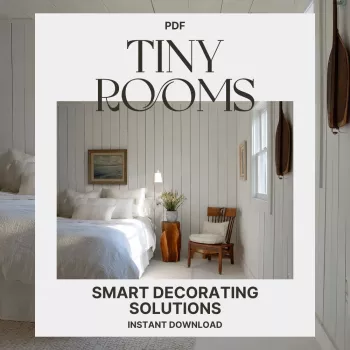
Smart Decorating Solutions for Tiny Rooms: Space-Saving Ideas That Feel Stylish, Not Cramped
Small rooms can look polished and feel comfortable when layout, storage, and visual balance work together. The goal isn’t to “own less” overnight—it’s to make daily life easier by setting zones, using vertical space, choosing multipurpose pieces, and upgrading lighting so a studio or compact room feels open, organized, and relaxing.
Start With a Quick Room Reset
Before buying anything new, get clarity on what the room needs to do. Ten minutes of planning can prevent weeks of shuffling furniture.
- Measure the room and note fixed elements (windows, doors, radiators, outlets) so furniture doesn’t block flow or power access.
- Choose one primary function per zone (sleep, work, lounge, dining) to reduce clutter and decision fatigue.
- Remove anything that doesn’t support the daily routine; keep essentials within arm’s reach and relocate rarely used items upward or out of sight.
- Aim for clear walkways—especially paths to the bed, bathroom, closet, and main seating.
Fast fixes that create space without remodeling
| Problem | Quick solution | Why it works |
|---|---|---|
| Crowded entry area | Add wall hooks + a slim catch-all tray | Moves daily items off the floor and keeps essentials visible but contained |
| No room for a nightstand | Use a floating shelf or wall-mounted pocket organizer | Frees floor space and keeps bedside items accessible |
| Small closet overflow | Add a second hanging rod or cascading hangers | Doubles vertical capacity without increasing footprint |
| Studio feels like one big pile | Use a rug + lighting to define zones | Creates visual separation so the space reads as intentional |
| Too many small decor items | Group items into 1–2 curated vignettes | Reduces visual noise and makes the room feel calmer |
Plan a Layout That Protects Movement
In tiny rooms, “spacious” usually means you can move naturally without sidestepping obstacles. Start with the largest piece and build outward like a puzzle.
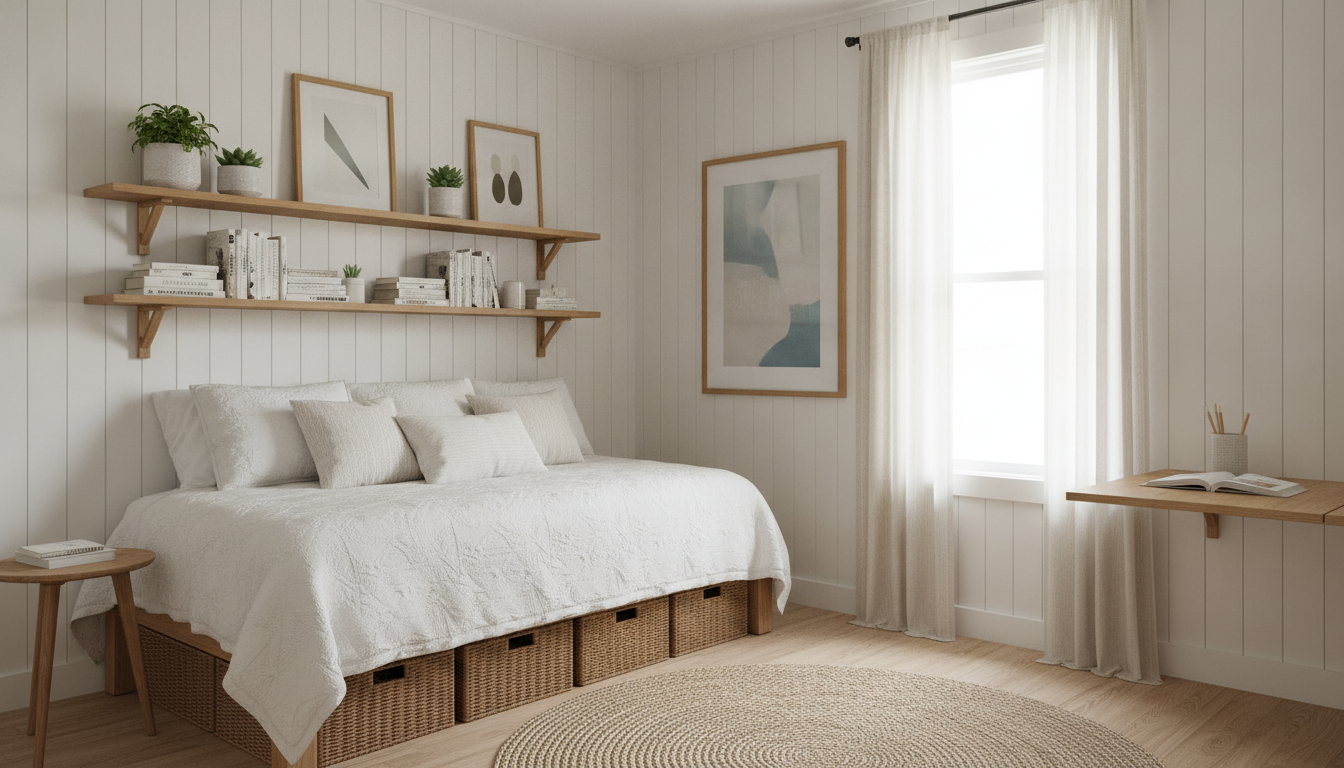
- Place the largest piece first (usually the bed or sofa) and keep it to one side to preserve a clear central path.
- Use corners strategically: corner shelves, corner desks, and angled floor lamps reclaim “dead” space.
- Avoid blocking light sources; furniture with legs or open bases helps the room feel less heavy.
- When possible, align furniture edges to create a clean grid rather than scattered angles that steal usable area.
If you’re unsure where to start, a simple rule is to protect one strong sightline—ideally from the entry toward the window—so the room reads longer and calmer the moment you walk in.
Make Vertical Space Do the Heavy Lifting
When square footage is limited, the walls become your “extra closet.” Done well, vertical storage looks intentional instead of cluttered.
- Go higher, not wider: tall bookcases, stacked storage, and high-mounted shelving add capacity without shrinking floor area.
- Use wall systems for flexible storage—hooks, rails, and baskets can adapt as needs change.
- Keep the heaviest items at mid-height or lower for safety; store lightweight, seasonal items up high.
- Treat walls as functional zones (an entry wall, a work wall, a kitchen wall) to keep surfaces clear.
For renters, Magnetic Hooks are a quick win on metal surfaces like a fridge or a steel door—great for keys, small tools, or hanging a compact tote so your counters stay clear.
Choose Multipurpose Pieces That Earn Their Footprint
In small rooms, every item should justify the space it occupies. When one piece can replace two, the room feels instantly lighter.
- Look for dual-role items: storage ottomans, nesting tables, sofa beds, and desks that double as vanities.
- Prioritize closed storage for visual calm; open shelves work best when styled with consistent containers.
- Consider foldaway options for dining or work: wall-mounted drop-leaf tables and stackable chairs.
- Use a one-in, one-out rule for small rooms so hard-won space doesn’t disappear over time.
If you want a step-by-step approach you can follow room-by-room, the Smart Decorating Solutions for Tiny Rooms | How to Decorate Small Spaces Effectively | Space-Saving eBook for Apartment & Studio Styling is designed for apartment-friendly upgrades and layouts that feel finished, not overfilled.
Lighting Tricks That Make Small Rooms Feel Larger
Lighting is one of the fastest ways to make a tiny space feel “expanded.” The trick is to reduce harsh contrast and brighten corners so the room has fewer visual dead zones.
For a practical overview of layered lighting and efficient bulb choices, reference the U.S. Department of Energy guidance on home lighting basics.
Color, Pattern, and Texture Without Visual Clutter
If you like the idea of zoning a studio by “area,” light-touch feng shui concepts can help you think in purposeful sections—Architectural Digest offers a helpful primer on the Bagua map as a general guide.
Small Organization Habits That Keep Rooms Looking Styled
Even a small “catch-all” can look curated. A compact dish such as the Cute Ceramic Cat Face Sauce Dish – Creative Small Condiment Plate works as a bedside ring dish, a desk paperclip spot, or an entry key drop—tiny, contained, and easy to reset.
A Practical Styling Plan for Studios and Tiny Bedrooms
FAQ
How can a small room look bigger without buying new furniture?
Clear pathways first, then reduce surface clutter so the eye has more “resting space.” Layer lighting to brighten corners, and place a mirror to reflect a window or a lamp for an instant lift.
What is the best way to divide a studio apartment into zones?
Use rugs and lighting to signal changes in function (sleep, lounge, work), then place furniture to reinforce those boundaries. Low shelves, curtains, or open bookcases can separate areas without blocking light.
How do you add storage to a tiny room without making it feel cramped?
Prioritize vertical storage (tall shelving, hooks) and multipurpose pieces that hide items behind doors or lids. Matching containers and closed-front storage reduce visual noise so the room still feels calm.











Leave a comment