-
Shop
- Adidas
- Advanced Technologies
- AI Skills Mastery 2026 Collection
- Best-Sellers
- Car Accessories
- Dating & Social Skills
- Digital Resources
- AI Skills
- Beauty
- Budgeting & Saving
- Car Buying & Ownership
- Cozy Feast Collection
- Electronics & Technology
- Entrepreneurship & Business Growth
- Financial Education
- Financial Independence
- Financial Mindset & Psychology
- Goal Setting
- Hobbies
- Home Styling & Organization
- Leadership
- Mindfulness
- Mindset
- Parenting & Child Development
- Personal Style & Fashion
- Pet Lifestyle & Wellness
- Positive Thinking
- Sleep Improvement
- Smart Life with AI
- Stress Management & Relaxation
- Travel Planning
- Yoga & Fitness
- Yoga & Mind-Body Practices
- Education & Learning
- Family & Parenting
- Fashion
- Furniture
- Gadgets
- Health & Beauty
- Health & Wellness
- Home & Garden
- Jewelry
- Kids & Babies
- Kitchen
- Kitchen Best-Sellers
- Nike
- Patio, Lawn & Garden
- Personal Growth
- Pet Care
- Pet Supplies
- Pets
- Sport & Outdoors
- Travel
- Wealth
- YouTube Shorts Best-Sellers
- Popular
- Best deals
4-Piece Silicone Utensil Set for Nonstick Pan Care
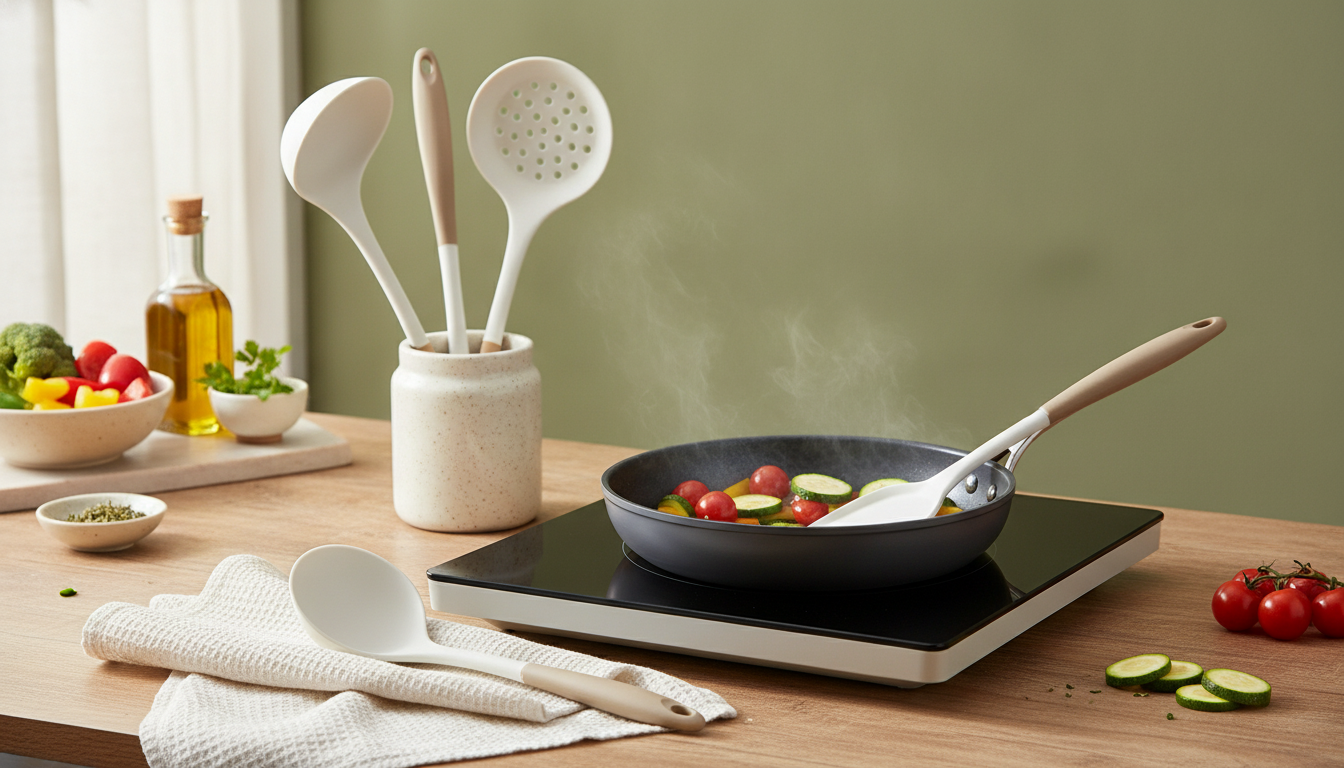
4-Piece Silicone Kitchen Utensil Set for Non-Stick Cooking
Non-stick cookware performs best when paired with utensils that won’t scratch, melt, or stain easily. A compact silicone set covers everyday tasks—stirring, flipping, serving, and scraping—while helping extend the life of coated pans and making cleanup simpler. If you cook in a small space or just want fewer mismatched tools, a 4-piece silicone lineup is a practical “use-it-daily” upgrade that plays nicely with modern non-stick and ceramic-coated cookware.
What’s Included and What Each Tool Does
A well-chosen 4-piece set focuses on the most common stovetop and prep tasks without overfilling a utensil crock. While exact shapes vary by brand, the best sets typically include a flexible scraper, a turner, and at least one stirring/serving tool so you can move from prep to plating without reaching for metal.
- Core set coverage: Designed for everyday cooking tasks without clutter.
- Flexible scraper/spatula: Ideal for folding batters, scraping bowls, and cleaning the edges of pans.
- Turner: Helps flip eggs, pancakes, and delicate fish while staying gentle on non-stick surfaces.
- Spoon or stirring utensil: A go-to for sauces, soups, and sautéed vegetables.
- Serving tool: Useful for plating neatly without clanking against cookware or risking chips and scratches.
Everyday Tasks Covered by a 4-Piece Silicone Set
| Kitchen task | Most helpful utensil | Why silicone helps |
|---|---|---|
| Scraping bowls and jars | Flexible spatula/scraper | Conforms to curves for less waste and faster cleanup |
| Flipping delicate foods | Turner/spatula | Gentle edge helps prevent scratches on coated pans |
| Stirring sauces and soups | Spoon/stirrer | Non-reactive surface helps avoid metallic taste transfer |
| Serving from cookware | Serving spoon/ladle (if included) | Reduces risk of damaging non-stick coatings during plating |
Why Silicone Works Well with Non-Stick Cookware
Non-stick coatings are designed for release, not for abrasion. Silicone tools are popular because they’re gentle during contact and flexible enough to follow the curve of a skillet or saucepan, helping you lift food cleanly without scraping aggressively.
- Less scratching than metal: Metal edges can nick coatings and shorten the usable life of non-stick pans.
- Quieter, more comfortable cooking: Silicone tends to be softer against cookware, reducing the “clank” of utensils.
- Works across cookware types: A good match for traditional non-stick and many ceramic-coated surfaces.
- Easy cleanup: Silicone is often easier to wash than porous materials, and many tools rinse clean quickly.
- Useful beyond the stove: From sautéing to mixing doughs, a compact set covers both hot and cold tasks.
For additional background on materials used around food, the U.S. Food & Drug Administration’s Food Contact Substances resources explain how food-contact materials are evaluated and regulated.
Safety and Heat Considerations
Silicone is widely used in kitchen tools, but performance still depends on build quality and temperature ratings. A few smart habits help keep cooking safe and keep utensils in good condition.
- Look for food-grade labeling: Choose utensils labeled food-grade and appropriate for typical sautéing and simmering temperatures.
- Avoid prolonged contact with very hot pan rims: Don’t leave a utensil resting on the edge of a hot pan for long periods unless it’s explicitly rated for that use.
- Keep away from direct flame: Silicone tools shouldn’t touch open flames or exposed heating elements.
- Retire damaged tools: Replace utensils with deep cuts, peeling, warping, or sticky residue that won’t wash off.
For general kitchen safety habits while cooking, the USDA FSIS Kitchen Companion is a reliable reference for safe handling practices.
Cleaning and Care for Long-Lasting Utensils
Silicone is low-maintenance, but it can sometimes hold onto thin oil films or strong aromas if left unwashed for too long. A simple routine keeps the surface feeling “clean-clean” instead of slightly slick.
- Wash soon after cooking: Prompt washing helps prevent oil buildup on silicone surfaces.
- Soak for stubborn residue: For lingering odors or residue, soak in warm water with dish soap and gently scrub textured areas.
- Skip abrasive scouring pads: Harsh scrubbers can roughen the surface, which may attract stains over time.
- Dry thoroughly before storing: Reduces moisture buildup in utensil holders and drawers.
- Store without sharp bends: Avoid prolonged creasing so tool heads keep their intended shape.
A Practical Fit for Small Kitchens and Everyday Cooking
Product Details and Quick Overview
If you’re looking for a simple, cookware-friendly lineup for daily meals, consider the 4-Piece Silicone Kitchen Utensil Set – Non-Stick Cooking Essentials. It’s designed for common tasks like stirring, flipping, scraping, and serving—lightweight essentials that fit neatly into a basic kitchen setup or replace older tools that have seen better days.
| Item | Details |
|---|---|
| Name | 4-Piece Silicone Kitchen Utensil Set – Non-Stick Cooking Essentials |
| Price | 11.97 USD |
| Use case | Everyday cooking with non-stick cookware |
| Product page | View product |
More in-stock picks to round out everyday routines
- Women’s Waterproof Laptop Backpack School Travel Bag 15.6 Inch (great for commuting, campus days, and carry-on organization)
- Creative Bear Wall-Mounted Toothbrush Cups – Whimsical Bathroom Accessory (a space-saving bathroom add-on for tighter countertops)
FAQ
Can silicone utensils be used safely with non-stick pans?
Yes—silicone is generally gentle on coated surfaces and helps reduce scratching compared with metal. For best results, choose food-grade utensils and follow your cookware maker’s care guidance, especially around heat limits.
How should silicone utensils be cleaned if they feel greasy or hold odors?
Soak them in warm water with dish soap, then gently scrub any textured areas and rinse well. Dry thoroughly; if residue persists, repeat the soak to remove leftover oil film.
When should silicone kitchen utensils be replaced?
Replace them if you see deep cuts, peeling, warped edges, or sticky residue that doesn’t wash off. Damaged surfaces can be harder to clean thoroughly and may affect performance on delicate non-stick coatings.
Recommended for you


Rebuild Self-Care Motivation: Tiny Steps That Stick
Jun 17, 2026













Leave a comment