-
Shop
- Adidas
- Advanced Technologies
- AI Skills Mastery 2026 Collection
- Best-Sellers
- Car Accessories
- Dating & Social Skills
- Digital Resources
- AI Skills
- Beauty
- Budgeting & Saving
- Car Buying & Ownership
- Cozy Feast Collection
- Electronics & Technology
- Entrepreneurship & Business Growth
- Financial Education
- Financial Independence
- Financial Mindset & Psychology
- Goal Setting
- Hobbies
- Home Styling & Organization
- Leadership
- Mindfulness
- Mindset
- Parenting & Child Development
- Personal Style & Fashion
- Pet Lifestyle & Wellness
- Positive Thinking
- Sleep Improvement
- Smart Life with AI
- Stress Management & Relaxation
- Travel Planning
- Yoga & Fitness
- Yoga & Mind-Body Practices
- Education & Learning
- Family & Parenting
- Fashion
- Furniture
- Gadgets
- Health & Beauty
- Health & Wellness
- Home & Garden
- Jewelry
- Kids & Babies
- Kitchen
- Kitchen Best-Sellers
- Nike
- Patio, Lawn & Garden
- Personal Growth
- Pet Care
- Pet Supplies
- Pets
- Sport & Outdoors
- Travel
- Wealth
- YouTube Shorts Best-Sellers
- Popular
- Best deals
Wooden Montessori Shape Match & Threading Puzzle for Kids
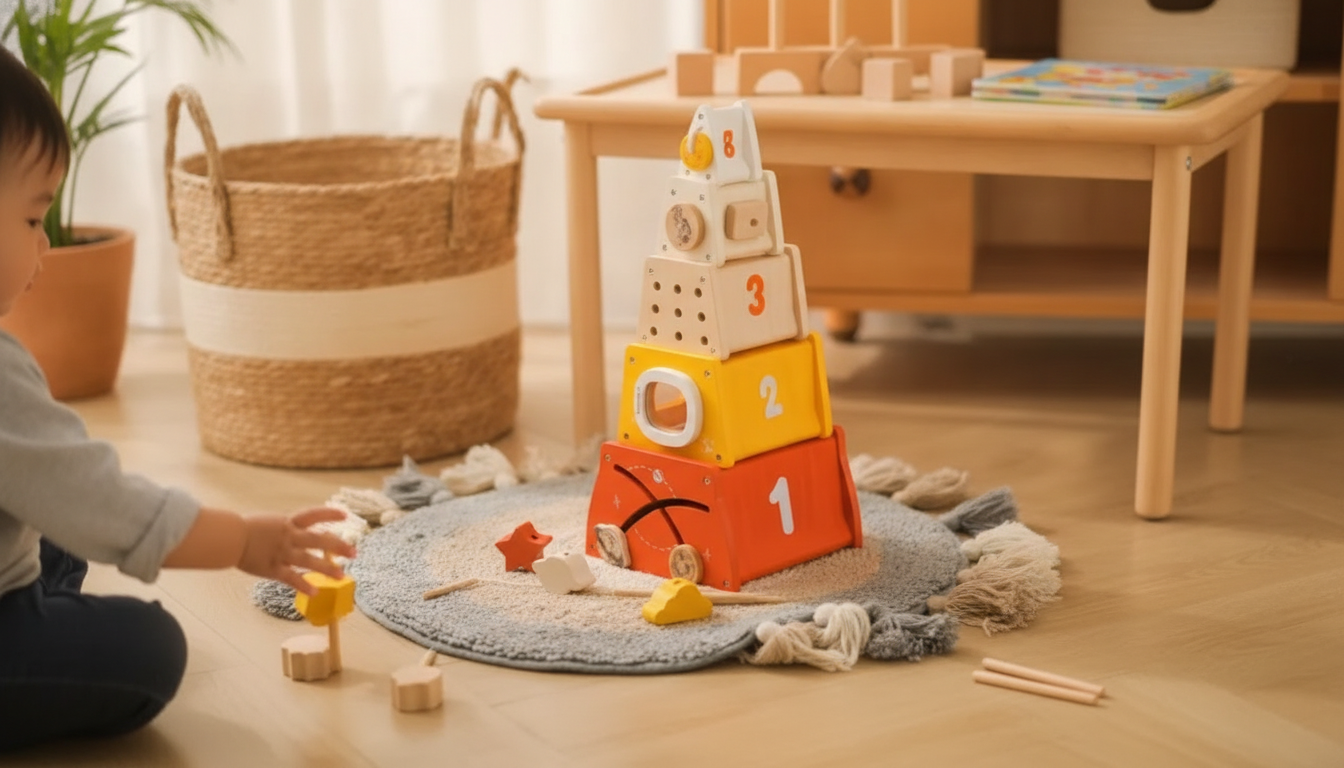
Kids Wooden Montessori Shape Matching Threading Puzzle Toy
A hands-on wooden activity that combines classic shape matching with threading practice, designed to support early fine-motor control, problem-solving, and independent play through simple, repeatable steps. With a clear beginning and end, children can work at their own pace—matching, lacing, unlacing, and starting again—while building skills that carry over into everyday tasks like dressing, drawing, and using utensils.
What This Toy Is and How It Works
A shape matching threading puzzle typically includes a wooden base board with cutouts, a set of chunky wooden shapes, and a lace or string with a firm tip. It blends two foundational early-learning activities into one:
- Shape matching: The child compares edges, corners, and curves to find the correct slot.
- Threading practice: The child guides the lace through pre-drilled holes in each piece, then pulls it through to continue.
The play style is Montessori-inspired: child-led exploration, repetition, and self-correction. The puzzle “teaches” without constant adult direction because each piece fits only where it belongs, and the lace either passes through the hole or it doesn’t. Many kids enjoy the satisfying rhythm of a clear sequence—sort, match, thread, unthread, repeat—which can help them settle into focused, independent play.
Key Developmental Benefits
This kind of toy supports multiple skills at once, without feeling like a lesson. It’s especially useful during toddler and preschool years, when children are refining hand control and learning to persist through small challenges.
- Fine motor skills: Practicing a pincer grasp, wrist rotation, and controlled pulling.
- Bilateral coordination: One hand steadies the board while the other threads and pulls.
- Hand–eye coordination: Aligning the lace tip with holes and orienting shapes correctly.
- Early logic and spatial reasoning: Rotating pieces mentally, noticing corners vs. curves, and comparing outlines.
- Language building: Naming shapes/colors and using action words like “through,” “around,” and “next.”
- Confidence and independence: Immediate feedback when a piece fits or the lace passes through successfully.
| Skill area | What the child practices | Simple parent prompt |
|---|---|---|
| Fine motor | Pinching, pulling, pushing lace through holes | “Can you push the tip through and pull it out?” |
| Bilateral coordination | Stabilizing board with one hand while threading with the other | “Hold the board steady while you thread.” |
| Shape recognition | Matching edges and corners to the correct cutout | “Which piece has three corners?” |
| Sequencing | Following steps from start to finish, repeating patterns | “What comes next after this hole?” |
| Attention and patience | Slowing down to align and thread accurately | “Take your time—line it up first.” |
What to Look For in Build Quality
Not all wooden puzzles are made the same, and build quality matters for both safety and long-term play value. A few features tend to make threading puzzles more enjoyable (and less frustrating):
- Smooth, rounded edges: Boards and pieces should feel sanded and comfortable in the hand to help reduce scratches and splinters.
- Child-safe finishes: Look for clear labeling and compliance statements where available.
- A well-designed lace: A firm tip makes hole-to-hole threading easier, while a comfortable thickness helps small hands grip and pull without slipping.
- Practical piece sizing: Pieces should be easy to grasp and appropriate for the child’s age and supervision level.
- Sturdy construction: The board should lie flat and handle repeated threading without warping easily.
For broader toy safety guidance, review recommendations from the American Academy of Pediatrics and injury-prevention information from the U.S. Consumer Product Safety Commission (CPSC).
How to Play: Simple Activities That Grow With the Child
One reason this toy stays relevant is that the “right” level can change week to week. Start simple, then add small challenges as coordination improves.
- Starter (matching only): Place pieces beside the board and invite matching one at a time. Rotate pieces slowly to show how corners and curves “find” their home.
- Threading basics: Demonstrate “in and out” with one hole before attempting a full path. Some children do best starting with just two holes.
- Color or shape hunt: Ask for a specific shape or color, then match and thread it. This adds listening practice and quick visual scanning.
- Pattern play: If the set supports multiple pieces in a row, try a repeating order (circle–square–circle–square). Keep it playful and short.
- Timed focus (gentle): Use a brief “quiet challenge” that rewards accuracy, not speed—especially helpful for kids who rush and get frustrated.
To keep the activity developmentally appropriate and child-centered, principles like those summarized by NAEYC’s Developmentally Appropriate Practice can be a helpful reference for caregivers.
Age Guidance and Safety Notes
Care, Storage, and Keeping It Looking New
When This Makes a Great Gift
- Women’s Waterproof Laptop Backpack School Travel Bag 15.6 Inch
- Creative Bear Wall-Mounted Toothbrush Cups – Whimsical Bathroom Accessory
- 10K in 100 Days: The Bold & Smart Path to Rapid Savings (Digital Download PDF)
FAQ
What age is a shape matching threading puzzle suitable for?
These toys are commonly used from toddler through preschool years, but the best fit depends on the manufacturer’s age label, piece size, and your child’s coordination and mouthing habits. For younger toddlers, extra supervision is important due to the lace/cord and any smaller components.
How does threading help a child learn?
Threading builds fine-motor control by practicing grasping, pushing, and pulling while coordinating both hands together. It also strengthens hand–eye coordination and sequencing as children follow an “in and out” path, which can support early writing readiness over time.
How should a wooden puzzle toy be cleaned safely?
Wipe the wood with a lightly damp cloth and use mild soap if needed, then air dry completely before storing. Avoid soaking the toy, and regularly check for wear like frayed lace ends, cracks, or peeling finish.
Recommended for you



Prevent Hair Thinning: Scalp Care Habits + Checklist
Jun 14, 2026













Leave a comment