-
Shop
- Adidas
- Advanced Technologies
- AI Skills Mastery 2026 Collection
- Best-Sellers
- Car Accessories
- Dating & Social Skills
- Digital Resources
- AI Skills
- Beauty
- Budgeting & Saving
- Car Buying & Ownership
- Cozy Feast Collection
- Electronics & Technology
- Entrepreneurship & Business Growth
- Financial Education
- Financial Independence
- Financial Mindset & Psychology
- Goal Setting
- Hobbies
- Home Styling & Organization
- Leadership
- Mindfulness
- Mindset
- Parenting & Child Development
- Personal Style & Fashion
- Pet Lifestyle & Wellness
- Positive Thinking
- Sleep Improvement
- Smart Life with AI
- Stress Management & Relaxation
- Travel Planning
- Yoga & Fitness
- Yoga & Mind-Body Practices
- Education & Learning
- Family & Parenting
- Fashion
- Furniture
- Gadgets
- Health & Beauty
- Health & Wellness
- Home & Garden
- Jewelry
- Kids & Babies
- Kitchen
- Kitchen Best-Sellers
- Nike
- Patio, Lawn & Garden
- Personal Growth
- Pet Care
- Pet Supplies
- Pets
- Sport & Outdoors
- Travel
- Wealth
- YouTube Shorts Best-Sellers
- Popular
- Best deals
Stillness for Busy Days: Meditation & Mindfulness That Works
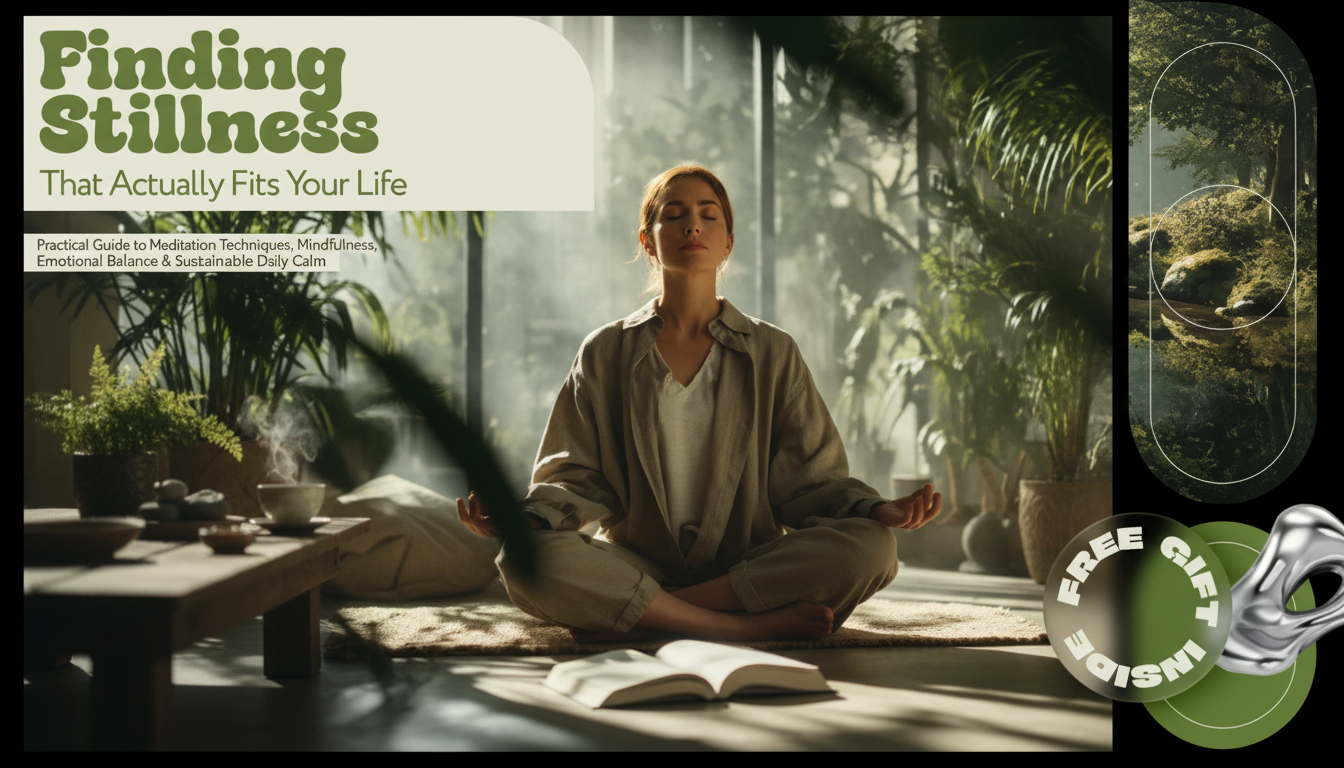
Finding Stillness That Actually Fits Your Life: Practical Meditation, Mindfulness, and Daily Calm
Stillness doesn’t require long retreats or perfect silence. A calmer baseline can be built through small, repeatable practices that match real schedules, real stress, and real emotions. The goal is steady emotional balance—using simple meditation techniques, mindful moments throughout the day, and a plan that stays sustainable even when life gets busy.
What “stillness that fits” looks like in everyday life
Stillness that fits your life is less about “emptying your mind” and more about changing what happens after life gets loud. The outcomes tend to look practical: less reactivity in conversations, clearer attention while working, easier transitions between tasks, and quicker recovery after stressful moments.
Instead of all-or-nothing expectations, aim for a minimum effective dose. Thirty seconds to ten minutes is enough to train the skill of returning—returning to your breath, returning to the present moment, returning to a more grounded response.
Choosing the right practice is also situational. Your energy level, time available, and emotional intensity matter. A technique that feels soothing at night might feel irritating at noon. And progress isn’t measured by having a perfectly quiet mind; it’s measured by consistency and recovery time—how quickly you come back to yourself after you drift or get triggered.
A quick self-check to match the right technique to the moment
If your mind is racing, use a narrow anchor (breath counting, mantra, or a steady sound) to reduce cognitive load. If emotions feel heavy, gentle labeling plus self-compassion phrases can soften resistance. If your body feels tense, a body scan or progressive muscle relaxation helps downshift the nervous system. If sleep is the goal, longer exhales and non-striving awareness work best—nothing to “achieve,” just a steady easing.
| Situation | Time available | Best-fit technique | How it should feel after |
|---|---|---|---|
| Between meetings, mentally cluttered | 1–3 minutes | Breath counting (1–10) or box breathing | More organized attention; less urgency |
| Feeling irritated or reactive | 2–5 minutes | Labeling (“thinking”, “tightness”, “anger”) + slow exhale | More space before responding |
| Tense shoulders/jaw, restless body | 3–8 minutes | Body scan or progressive muscle relaxation | Physical release; softer posture |
| Overwhelmed or anxious | 3–10 minutes | Grounding with senses (5-4-3-2-1) + hand-on-heart | Safer, steadier baseline |
| Trying to fall asleep | 5–12 minutes | Guided relaxation or breath with longer exhales | Sleepier, less efforting |
| Low mood, emotionally flat | 2–6 minutes | Loving-kindness phrases or gratitude scan | Warmer tone; gentler self-talk |
Core meditation techniques that work without needing perfect conditions
Breath awareness
Notice the physical sensations of inhaling and exhaling—air at the nostrils, the rise and fall of the chest, the belly expanding. When attention wanders (it will), return without self-criticism. The return is the repetition that builds steadiness.
Counting breath
Count each exhale up to 10, then begin again. If you get distracted, restart at 1. The simplicity is the point: it gives the mind one job when it’s overloaded.
Mantra practice
Repeat a neutral phrase such as “calm,” “here,” or “this breath.” A mantra can be especially helpful when thoughts feel loud, because it crowds out mental noise without requiring force.
Open monitoring
Instead of narrowing attention, observe thoughts, sounds, and sensations as passing events. The goal is noticing, not controlling. Think “watching weather” rather than “stopping storms.”
Walking meditation
Feel each step and shifting weight. Notice heel-to-toe movement, the contact with the ground, and the swing of your arms. This is ideal if sitting still feels like climbing the walls.
Mindfulness in motion: turning routine moments into calm anchors
Mindfulness becomes realistic when it rides on things you already do. Use “transition cues”: before opening a laptop, entering the car, or starting a call, take one slow breath and relax your jaw. These tiny resets interrupt momentum-based stress.
Emotional balance: responding instead of reacting
A sustainable daily calm plan (7 minutes baseline + optional add-ons)
Common obstacles—and practical fixes that keep the habit alive
A guided resource for building your personal stillness routine
If you want structure without rigidity, a step-by-step guide can help you explore styles and pick what feels natural—especially on days when you don’t want to improvise. Finding Stillness That Actually Fits Your Life – Practical Guide to Meditation Techniques, Mindfulness, Emotional Balance & Sustainable Daily Calm is designed around realistic practice blocks, emotional-balance prompts (labeling, grounding, self-compassion), and quick-start routines you can repeat when life is full.
For on-the-go mindfulness (commutes, errands, waiting rooms), it also helps to keep a small “calm kit” handy—earbuds, a note with your favorite mantra, and anything that supports less scrolling and more presence. A compact everyday bag like the Genuine Leather Women’s Crossbody Shoulder Bag – Minimalist Luxury Style makes it easier to carry those basics without overthinking it.
For more on potential benefits and safety, see guidance from NCCIH, the American Psychological Association, and the Mayo Clinic.
FAQ
How long should meditation be to actually help?
One to ten minutes can be genuinely helpful when it’s consistent. Set a 60-second minimum for busy days, and use a 5–7 minute baseline often enough to notice steadier attention and quicker recovery after stress.
What if meditation makes thoughts feel louder?
That’s common at first—quiet time can make mental activity more noticeable. Use a structured anchor like breath counting or a simple mantra, keep sessions shorter, and treat “noticing” as progress rather than a problem.
Is mindfulness different from meditation?
Meditation is a dedicated practice period (even two minutes) where you train attention on purpose. Mindfulness is present-moment awareness you can use anytime, like taking one slow breath before a call or fully tasting the first bites of a meal.










Leave a comment