-
Shop
- Adidas
- Advanced Technologies
- AI Skills Mastery 2026 Collection
- Best-Sellers
- Car Accessories
- Dating & Social Skills
- Digital Resources
- AI Skills
- Beauty
- Budgeting & Saving
- Car Buying & Ownership
- Cozy Feast Collection
- Electronics & Technology
- Entrepreneurship & Business Growth
- Financial Education
- Financial Independence
- Financial Mindset & Psychology
- Goal Setting
- Hobbies
- Home Styling & Organization
- Leadership
- Mindfulness
- Mindset
- Parenting & Child Development
- Personal Style & Fashion
- Pet Lifestyle & Wellness
- Positive Thinking
- Sleep Improvement
- Smart Life with AI
- Stress Management & Relaxation
- Travel Planning
- Yoga & Fitness
- Yoga & Mind-Body Practices
- Education & Learning
- Family & Parenting
- Fashion
- Furniture
- Gadgets
- Health & Beauty
- Health & Wellness
- Home & Garden
- Jewelry
- Kids & Babies
- Kitchen
- Kitchen Best-Sellers
- Nike
- Patio, Lawn & Garden
- Personal Growth
- Pet Care
- Pet Supplies
- Pets
- Sport & Outdoors
- Travel
- Wealth
- YouTube Shorts Best-Sellers
- Popular
- Best deals
Debt-Busting Budget Checklist: Pay Off Debt Step by Step

Debt-Busting Budget Checklist: A Step-by-Step Action Plan to Pay Off Debt
Paying off debt gets easier when every dollar has a job and the plan is simple enough to follow on busy days. A checklist approach turns a big goal into small, repeatable actions you can run each pay period: capture the right numbers, choose a payoff method, set realistic spending limits, and track progress without burnout.
What This Budget Checklist Helps Solve
- Decision fatigue: replaces guesswork with a repeatable sequence for each pay period.
- Cash-flow surprises: accounts for irregular bills, annual expenses, and timing gaps.
- Slow progress: ties the budget directly to a clear debt payoff target.
- Motivation dips: builds in quick wins and visible milestones.
Step 1: Gather the Numbers (10–20 minutes)
- List all income sources and note the dates they hit the account (paychecks, side income, benefits).
- Pull the last 1–2 months of statements and write down recurring expenses (rent/mortgage, utilities, subscriptions, insurance).
- Identify “quiet” spending categories that add up (food, delivery, convenience purchases, small online buys).
- Create a quick list of non-monthly expenses (car registration, annual memberships, gifts, school costs) so they don’t derail the plan.
- Choose a realistic start date (next payday is often easiest).
Quick Debt Inventory Snapshot
| Debt | Balance | APR | Minimum Payment | Due Date | Priority Notes |
|---|---|---|---|---|---|
| Credit card 1 | $___ | ___% | $___ | __/__/__ | High APR / small balance / promo ends soon |
| Credit card 2 | $___ | ___% | $___ | __/__/__ | Keep current / negotiate APR if possible |
| Personal loan | $___ | ___% | $___ | __/__/__ | Fixed term / autopay discount? |
| Auto loan | $___ | ___% | $___ | __/__/__ | Check payoff quote vs. balance |
Step 2: Pick a Payoff Method That Fits Your Personality
- Debt snowball: focus extra money on the smallest balance first for faster wins; roll that payment into the next debt.
- Debt avalanche: focus extra money on the highest APR first to reduce interest costs; progress can feel slower early on.
- Hybrid approach: start with one quick-win payoff, then switch to avalanche for efficiency.
- Write the rule once and follow it for at least 60–90 days before changing strategies.
- Keep minimum payments on all other debts to protect credit and avoid fees.
Step 3: Build a Bare-Bones Baseline Budget
- Start with essentials: housing, utilities, transportation, insurance, groceries, minimum debt payments.
- Add a small buffer category (even $25–$50) to prevent one unexpected expense from wrecking the plan.
- Set one “life happens” allowance that is honest (coffee, small treats, kids’ extras) to reduce rebound spending.
- If the baseline is higher than income, reduce categories in this order: subscriptions → dining/entertainment → variable shopping → renegotiate bills → housing/transport changes.
- Aim for a baseline that can run on autopilot during stressful weeks.
Step 4: Assign Every Dollar a Job (Including Extra Debt Payments)
- Calculate income minus baseline expenses to find the amount available for goals.
- Decide a fixed “extra payment” number for the target debt and schedule it with payday if possible.
- If income fluctuates, set a minimum extra payment and a “bonus rule” (for example, 50% of any extra income goes to debt).
- Use sinking funds for non-monthly costs (divide annual costs by 12 and save monthly).
- If building an emergency fund is needed, start small (for example, $500–$1,000) before accelerating payoff.
For practical budgeting fundamentals and templates, the Consumer Financial Protection Bureau (CFPB) is a solid reference. For reputable guidance on getting out of debt (and avoiding scams), review the Federal Trade Commission (FTC) overview.
Step 5: Set Up a System That Works With Real Life
- Choose a tracking style: weekly check-in, pay-period budget, or envelope-style categories.
- Automate what can be automated: minimum payments, extra payment, and key bills.
- Create a “spending pause” rule for impulse buys (24 hours for non-essentials over a set amount).
- Plan for friction points: weekends, holidays, travel, and stressful work weeks.
- Keep the budget visible: printed pages on a clipboard, or a saved digital file used at the same time each week.
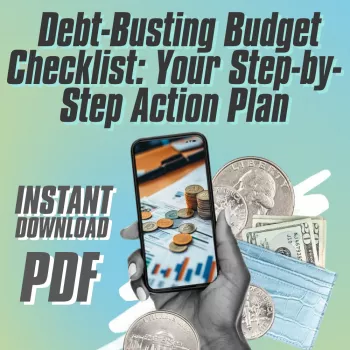
If a single place to keep the checklist, trackers, and payoff plan would make consistency easier, consider the Debt-Busting Budget Checklist printable financial planner (digital download). For a simple “visibility” upgrade, Magnetic Hooks can help keep a clipboard or envelope holder where you’ll actually see it (fridge, filing cabinet, or metal door).
Step 6: Weekly 15-Minute Check-In (The Momentum Builder)
- Reconcile what was planned vs. what actually happened (no shame—just data).
- Move money between categories if needed before the week ends.
- Confirm upcoming due dates and account balances to avoid overdrafts and late fees.
- Track one measurable win: total debt paid down, interest avoided, or number of no-spend days.
- Adjust only one or two categories at a time so the plan stays stable.
A helpful way to keep this check-in short is to reuse the same sequence every time: (1) bills due before next payday, (2) groceries/transport for the week, (3) minimum payments confirmed, (4) extra payment scheduled, (5) one small “reset” move (like pausing a subscription or lowering one category by $10).
Step 7: Troubleshooting Common Roadblocks
Printable Digital Planner Option
FAQ
Should debt be paid off before building an emergency fund?
A small starter emergency fund first (often $500–$1,000) helps prevent new debt when surprises happen, then extra money can prioritize high-interest balances. If income is very stable and expenses are predictable, the starter fund can be smaller, but skipping it entirely often backfires.
What if income is irregular or changes month to month?
Use a pay-period budget based on your lowest typical income, fund essentials first, and set a minimum extra payment you can always hit. When income is higher, apply a percentage rule (such as putting 50% of the “extra” toward the target debt) so progress accelerates without guessing.
How often should a budget be updated while paying off debt?
Do a quick weekly check-in to prevent drift, plus a deeper review each month or pay period to reset categories. Adjust when patterns repeat for a few cycles, not after one unusual week.















Leave a comment