-
Shop
- Adidas
- Advanced Technologies
- AI Skills Mastery 2026 Collection
- Best-Sellers
- Car Accessories
- Dating & Social Skills
- Digital Resources
- AI Skills
- Beauty
- Budgeting & Saving
- Car Buying & Ownership
- Cozy Feast Collection
- Electronics & Technology
- Entrepreneurship & Business Growth
- Financial Education
- Financial Independence
- Financial Mindset & Psychology
- Goal Setting
- Hobbies
- Home Styling & Organization
- Leadership
- Mindfulness
- Mindset
- Parenting & Child Development
- Personal Style & Fashion
- Pet Lifestyle & Wellness
- Positive Thinking
- Sleep Improvement
- Smart Life with AI
- Stress Management & Relaxation
- Travel Planning
- Yoga & Fitness
- Yoga & Mind-Body Practices
- Education & Learning
- Family & Parenting
- Fashion
- Furniture
- Gadgets
- Health & Beauty
- Health & Wellness
- Home & Garden
- Jewelry
- Kids & Babies
- Kitchen
- Kitchen Best-Sellers
- Nike
- Patio, Lawn & Garden
- Personal Growth
- Pet Care
- Pet Supplies
- Pets
- Sport & Outdoors
- Travel
- Wealth
- YouTube Shorts Best-Sellers
- Popular
- Best deals
Rebuild Self-Care Motivation: Tiny Steps That Stick
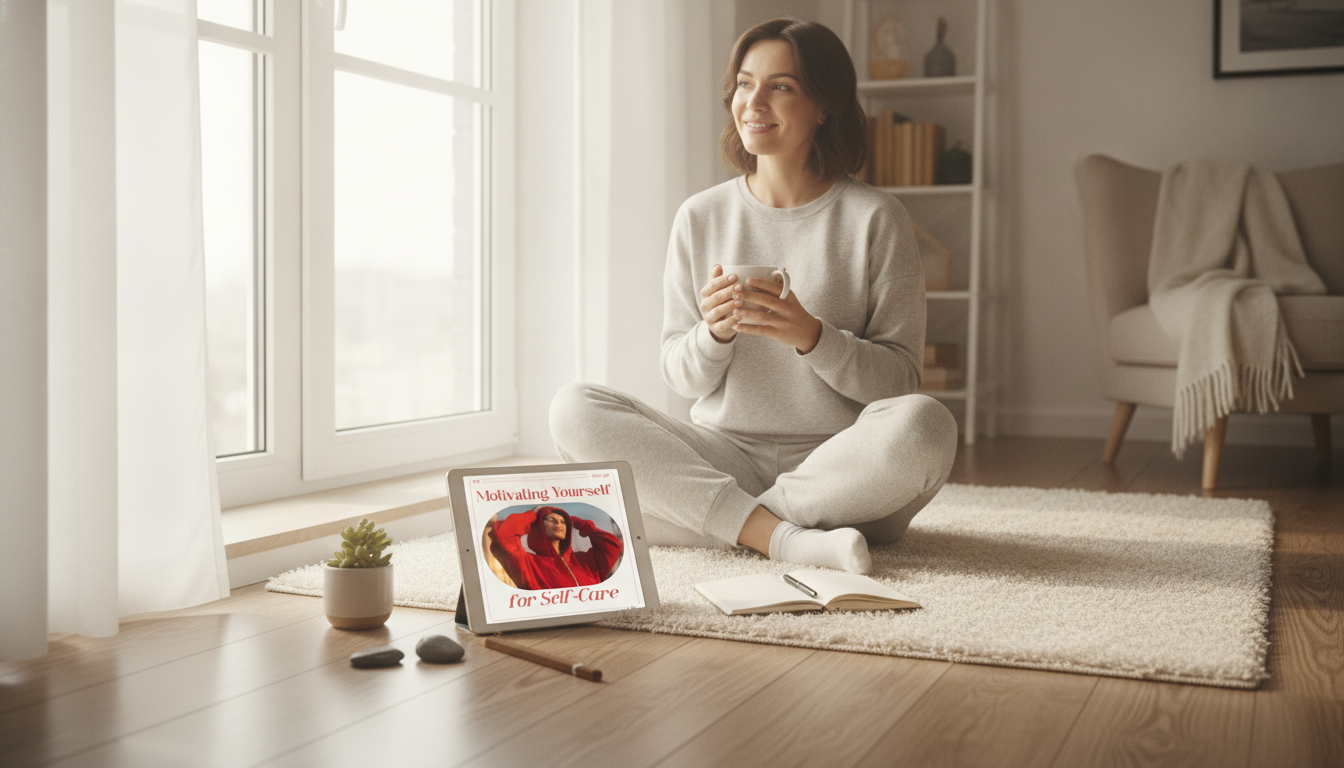
Fuel Your Fire: A Gentle Way to Rebuild Motivation for Self-Care
Motivation for self-care often fades when life feels heavy, busy, or emotionally loud. When your capacity is low, a “push harder” approach can backfire—making self-care feel like another chore you’re failing at. A gentler path works better: start small, reduce friction, and build a rhythm that supports you instead of demanding more from you. Below is a practical, low-pressure way to make self-care easier to begin—and easier to keep going.
When self-care feels hard to start
Motivation isn’t a fixed personality trait; it changes with sleep, stress, workload, hormones, and emotional strain. On days when your nervous system is already overloaded, self-care can feel like “one more task” on a list you can’t keep up with.
Another common snag is all-or-nothing thinking: if you can’t do the full routine (the workout, the perfect meal, the full skincare lineup), it’s tempting to do nothing. Add shame or comparison—how other people seem to “have it together”—and follow-through drops even more.
A more effective starting point is kindness plus clarity: define what “counts,” make it tiny, and let consistency build confidence.
A gentle motivation loop that actually works
Instead of waiting for motivation to appear, use a loop that makes action feel safe and repeatable. The goal is not intensity; it’s repeatability.
- Lower the starting step: choose a self-care action so small it feels almost too easy (30–120 seconds).
- Link the action to a cue: attach it to something already happening (after brushing teeth, after the kettle boils, when the laptop closes).
- Create a quick reward: add comfort, relief, or a tiny “done” signal so your brain tags the habit as worth repeating.
- Repeat before expanding: consistency comes first; intensity comes later.
Simple loop for rebuilding self-care momentum
| Step | What it looks like | Example |
|---|---|---|
| Cue | A reliable moment in the day | After getting out of bed |
| Tiny action | Under 2 minutes, low effort | Drink water; open curtains |
| Reward | Immediate positive feedback | Warm drink; favorite song |
| Next step | Only after it feels stable | Add a 5-minute stretch |
This mirrors widely used behavior-change concepts: make it obvious, easy, and satisfying, then build from there (see James Clear’s habit framework for more context: Atomic Habits concepts).
Common motivation blockers (and gentle fixes)
- Blocker: “I don’t have time.” Fix: choose “minimum effective self-care” that fits in 1–5 minutes (water, a protein snack, a quick tidy, a short walk to the mailbox).
- Blocker: “I don’t know what helps.” Fix: run small experiments for three days each. Track what shifts mood or energy even slightly (more daylight, less caffeine after noon, a bedtime alarm).
- Blocker: “I start then quit.” Fix: plan for low-capacity days. Every habit gets a fallback version (stretch becomes one shoulder roll; journaling becomes one sentence).
- Blocker: “It feels selfish.” Fix: reframe self-care as maintenance—like charging your phone so it can function. The APA describes self-care as actions that support health and well-being: APA Dictionary of Psychology: Self-care.
Choose a self-care menu (so decisions don’t drain you)
Decision fatigue can quietly erase motivation. A simple “menu” reduces mental load because you’re choosing from a short list instead of inventing a plan from scratch.
Build a three-category menu
Rotate by capacity (low, medium, high)
How to use a digital guide in daily life
For practical tiredness support, the NHS offers straightforward tips that pair well with small-step self-care: NHS: Self-help tips to fight tiredness.
Small upgrades that reduce friction at home and on the go
Make self-care visible
Place tools where the habit happens: a water bottle by your desk, skincare where you’ll see it, floss next to your toothbrush. If your bathroom setup feels annoying, simpler access can make routines feel lighter—like using Creative Bear Wall-Mounted Toothbrush Cups – Whimsical Bathroom Accessory to keep daily basics within reach.
Reduce setup time with a “reset kit”
Pre-pack a small kit for busy days or travel: charger, snacks, lip balm, mini notebook, pain reliever, hair tie. A reliable bag makes this easier to maintain; a structured option like the Women’s Waterproof Laptop Backpack School Travel Bag 15.6 Inch can help keep essentials organized so you’re not constantly repacking under stress.
Lower financial stress where possible
Money stress drains motivation fast, and stress reduction counts as self-care. If a simple plan would ease the mental load, a focused resource like 10K in 100 Days: The Bold & Smart Path to Rapid Savings (Digital Download PDF) can support “growth care” on days when you want to feel more grounded and in control.
What changes to expect (and what not to expect)
FAQ
What if motivation never shows up and everything feels like effort?
Start with the smallest possible action (30–60 seconds), link it to a cue you already have, and use a low-capacity fallback plan for hard days. If “everything feels like effort” lasts for weeks, it can be a sign of overwhelm or a mental health need, and getting support can help.
How long does it take for self-care to feel more automatic?
It varies, but tiny actions repeated consistently tend to become easier sooner than big routines. Focus on repetition and environment (cues, visibility, low friction) rather than willpower.
Is it okay if my self-care looks different from other people’s?
Yes—self-care is supposed to match your needs, body, schedule, and capacity. It can be practical and quiet (sleep, food, boundaries, tidying) and still “count,” even if it doesn’t look aesthetic or impressive.
Recommended for you



4-Piece Silicone Utensil Set for Nonstick Pan Care
Jun 16, 2026













Leave a comment