-
Shop
- Adidas
- Advanced Technologies
- AI Skills Mastery 2026 Collection
- Best-Sellers
- Car Accessories
- Dating & Social Skills
- Digital Resources
- AI Skills
- Beauty
- Budgeting & Saving
- Car Buying & Ownership
- Cozy Feast Collection
- Electronics & Technology
- Entrepreneurship & Business Growth
- Financial Education
- Financial Independence
- Financial Mindset & Psychology
- Goal Setting
- Hobbies
- Home Styling & Organization
- Leadership
- Mindfulness
- Mindset
- Parenting & Child Development
- Personal Style & Fashion
- Pet Lifestyle & Wellness
- Positive Thinking
- Sleep Improvement
- Smart Life with AI
- Stress Management & Relaxation
- Travel Planning
- Yoga & Fitness
- Yoga & Mind-Body Practices
- Education & Learning
- Family & Parenting
- Fashion
- Furniture
- Gadgets
- Health & Beauty
- Health & Wellness
- Home & Garden
- Jewelry
- Kids & Babies
- Kitchen
- Kitchen Best-Sellers
- Nike
- Patio, Lawn & Garden
- Personal Growth
- Pet Care
- Pet Supplies
- Pets
- Sport & Outdoors
- Travel
- Wealth
- YouTube Shorts Best-Sellers
- Popular
- Best deals
Knitting for Beginners: Easy Steps to Start Confidently
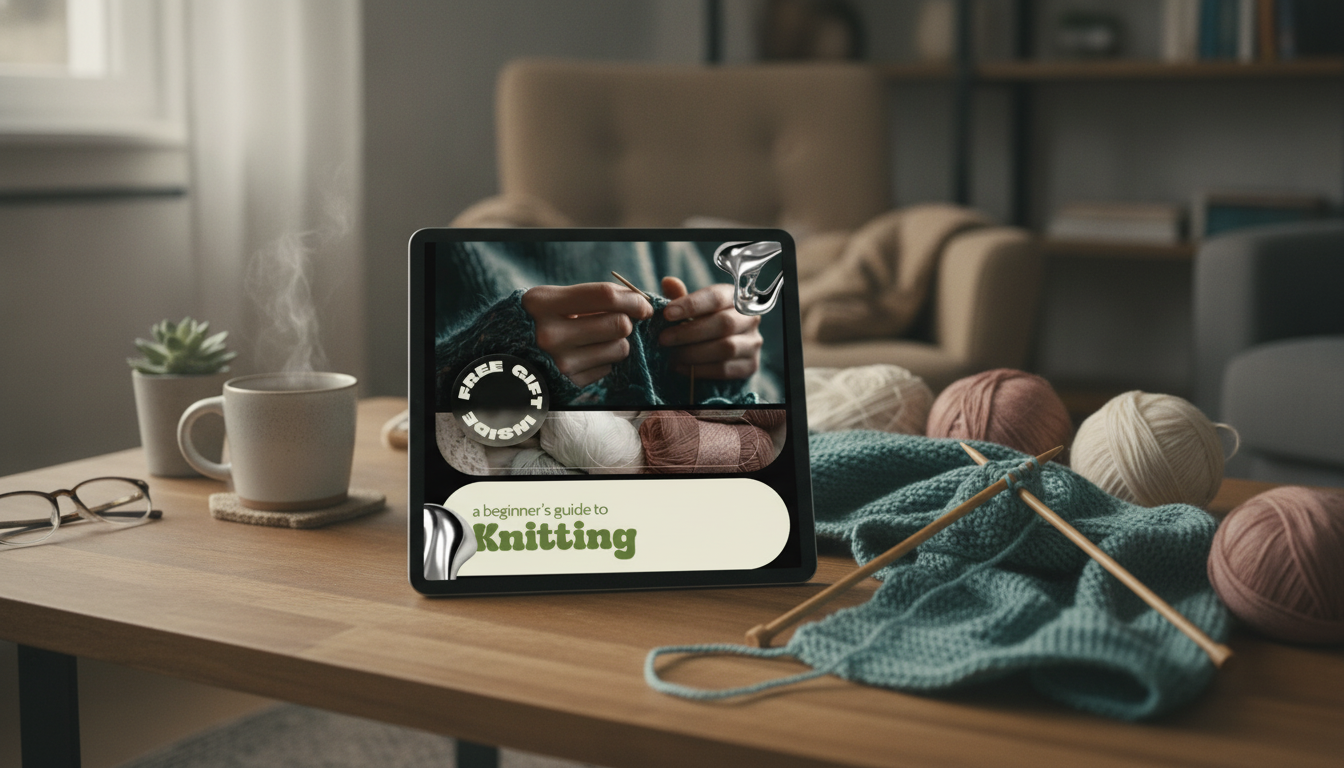
A Beginner’s Guide to Knitting: Simple Steps to Start with Confidence
Knitting is easiest to learn when the first project uses a few core skills: choosing the right yarn and needles, making a slipknot, casting on, knitting and purling, and finishing cleanly. The goal for the first swatch isn’t perfection—it’s building comfort with the tools and learning what “normal” stitches look and feel like as they form. For more guidance, see [PDF] KNITTING – Utah State University Extension.
What to Gather Before the First Stitch
- Yarn: Choose a smooth, light-colored worsted/aran weight yarn so you can see stitches clearly. Skip fuzzy, dark, or highly textured yarn at first (they hide mistakes and make it harder to count rows).
- Needles: Start with straight needles or a circular needle used flat. An 8–10 mm (US 11–15) needle can feel easier for absolute beginners, while 5–6 mm (US 8–10) is a versatile starting range for many yarns.
- Extras: Scissors, a tapestry (blunt) needle for weaving in ends, a measuring tape or ruler, and a few stitch markers (optional but helpful for tracking the start of a row or pattern repeats).
- Comfort setup: Sit with relaxed shoulders, keep the yarn path simple, and practice in short sessions so hands don’t cramp. Five focused minutes beats thirty frustrated minutes.
A Quick Match Guide: Yarn, Needle Size, and What Feels Easiest
Aim for a yarn label that recommends a needle size near what you have. Many beginners like needles that are slightly larger than the label range because the stitches have more “breathing room,” making it easier to insert the needle tip. Plied (twisted) yarns also show stitch definition better than single-ply or novelty yarns. For further reading, see How to Knit : 6 Steps (with Pictures) – Instructables.
Beginner-friendly starting combinations
| Yarn weight | Common label needle range | Why it helps beginners | Good first practice item |
|---|---|---|---|
| Worsted / Aran | 5–6 mm (US 8–10) | Balanced thickness and clear stitches | Dishcloth, simple scarf swatch |
| Bulky | 6.5–9 mm (US 10.5–13) | Faster progress; stitches are easy to see | Cowl, chunky headband |
| Super bulky | 9–12 mm (US 13–17) | Very quick results; fewer stitches to manage | Mini cowl, quick practice squares |
Step 1: Make a Slipknot
- Create a loop with the yarn tail crossing behind the working yarn (the strand connected to the ball).
- Pull a new loop through the first loop and place it on the needle; tighten gently so it sits snug but still slides.
- Leave a tail long enough for weaving in later (often 10–15 cm is plenty for practice).
Step 2: Cast On (A Simple Method for Beginners)
- Start with the slipknot on the needle as the first stitch.
- Use a beginner-friendly cast-on (such as the backward loop/e-loop) to get stitches onto the needle quickly; focus on consistent loop size rather than speed.
- Cast on 20–30 stitches for a first swatch—enough to see the fabric without feeling overwhelming.
- Check tension: stitches should move along the needle without being difficult to insert into on the next row.
Step 3: Knit Stitch (Your Foundation Row)
- Hold the needle with stitches in the non-dominant hand; insert the empty needle into the front of the first stitch.
- Wrap the working yarn around the needle tip in the direction that feels controlled and repeatable.
- Pull the new loop through and slide the old stitch off; keep the new stitch close to the needle tip to avoid stretching.
- Practice 5–10 rows of knit stitch to develop rhythm and even tension.
Step 4: Purl Stitch (The Partner to Knit)
- Bring yarn to the front before inserting the needle into the stitch.
- Insert the needle tip from back to front through the first stitch, wrap yarn, then pull a loop back through.
- Expect purling to feel awkward at first; it becomes easier once hand movements are consistent.
- Alternate rows of knit and purl to see how they form different textures.
Step 5: Reading Basic Fabric (So Mistakes Make Sense)
For a quick reference on standardized technique and terms, the Craft Yarn Council’s knitting basics is a helpful companion while you practice.
Step 6: Bind Off (Finish Neatly Without a Tight Edge)
Finishing Touches: Weave in Ends and Block Lightly
First Project Ideas That Build Skills Fast
Helpful Extras to Keep Your Knitting Organized
- Women’s Waterproof Laptop Backpack School Travel Bag 15.6 Inch — a roomy option for carrying a small project, yarn, and a printed pattern without bending needles at the bottom of a tote.
- Creative Bear Wall-Mounted Toothbrush Cups – Whimsical Bathroom Accessory — an easy way to corral tools like stitch markers, a tape measure, and a tapestry needle in a dedicated cup.
- 10K in 100 Days: The Bold & Smart Path to Rapid Savings | Digital Download PDF — useful for setting a simple craft budget, planning supplies, and avoiding “buy everything” overwhelm while you learn.
FAQ
How long does it take to learn the basics of knitting?
Many beginners can learn the slipknot, cast on, knit stitch, purl stitch, and bind off in a few short practice sessions over a week. Consistent 10–20 minute sessions usually build muscle memory faster than long occasional sessions.
What yarn is easiest for beginners to knit with?
A smooth, light-colored worsted/aran yarn is typically the easiest because stitches are visible and mistakes are easier to spot and fix. Acrylic is budget-friendly and low-maintenance, while wool has great elasticity that can feel forgiving as you learn tension.
Why are my knitting edges messy or getting wider?
This often happens when extra stitches are accidentally added (like unintended yarn overs) or when the first/last stitch isn’t worked consistently. Count stitches every few rows, keep your yarn position intentional between knit and purl, and slow down at the edge stitches until the habit sets.














Leave a comment