-
Shop
- Adidas
- Advanced Technologies
- AI Skills Mastery 2026 Collection
- Best-Sellers
- Car Accessories
- Dating & Social Skills
- Digital Resources
- AI Skills
- Beauty
- Budgeting & Saving
- Car Buying & Ownership
- Cozy Feast Collection
- Electronics & Technology
- Entrepreneurship & Business Growth
- Financial Education
- Financial Independence
- Financial Mindset & Psychology
- Goal Setting
- Hobbies
- Home Styling & Organization
- Leadership
- Mindfulness
- Mindset
- Parenting & Child Development
- Personal Style & Fashion
- Pet Lifestyle & Wellness
- Positive Thinking
- Sleep Improvement
- Smart Life with AI
- Stress Management & Relaxation
- Travel Planning
- Yoga & Fitness
- Yoga & Mind-Body Practices
- Education & Learning
- Family & Parenting
- Fashion
- Furniture
- Gadgets
- Health & Beauty
- Health & Wellness
- Home & Garden
- Jewelry
- Kids & Babies
- Kitchen
- Kitchen Best-Sellers
- Nike
- Patio, Lawn & Garden
- Personal Growth
- Pet Care
- Pet Supplies
- Pets
- Sport & Outdoors
- Travel
- Wealth
- YouTube Shorts Best-Sellers
- Popular
- Best deals
Fall Asleep Faster: A 5-Step Night Routine Checklist
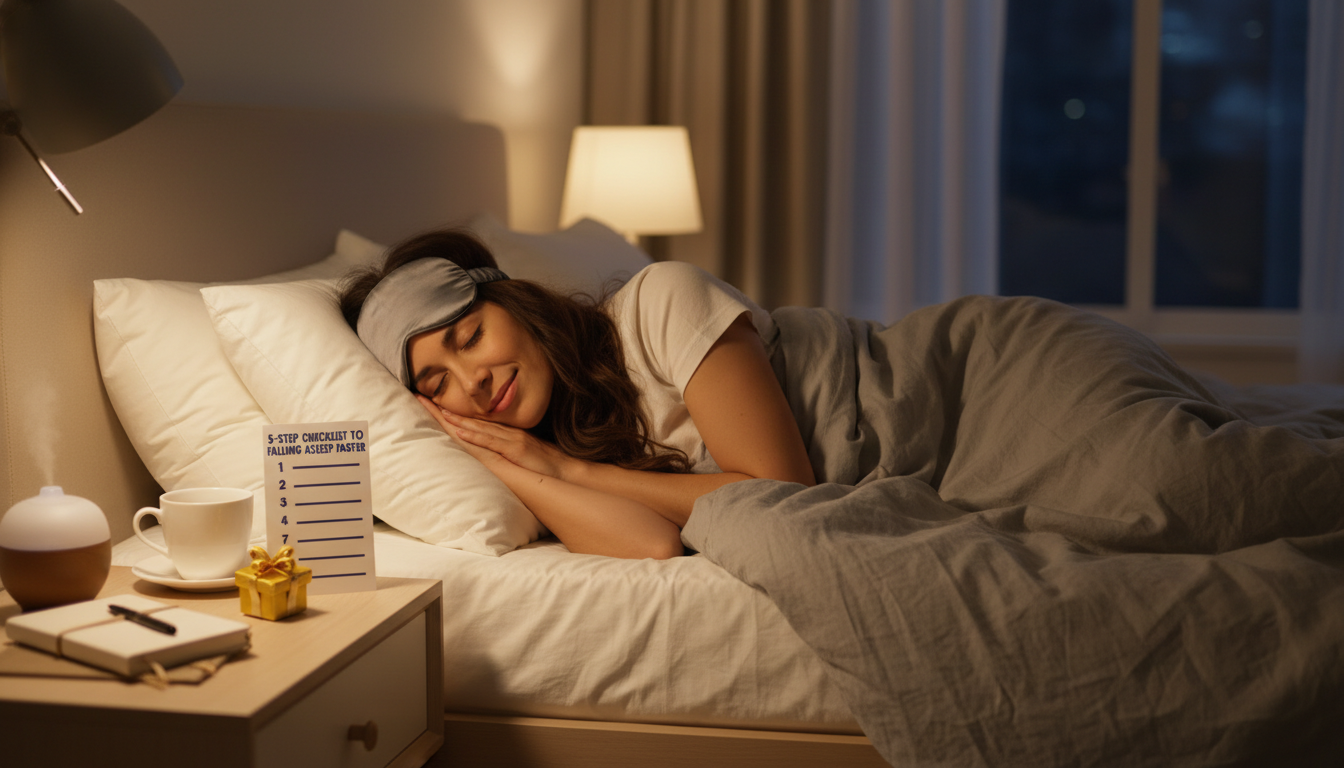
5-Step Checklist to Falling Asleep Faster
Falling asleep faster usually comes down to a handful of repeatable behaviors: a consistent wind-down, a sleep-friendly environment, and simple ways to quiet a busy mind. This 5-step checklist turns those best practices into an easy nightly sequence that can be done in about 20–40 minutes, then repeated until it becomes automatic.
What “falling asleep faster” actually depends on
- Sleep pressure: staying awake long enough during the day so the body is ready for sleep at night (too many late naps can reduce this).
- Circadian timing: light exposure, meal timing, and consistent wake time help set the internal clock so bedtime feels natural.
- Arousal level: stress, screens, caffeine, alcohol, and a too-warm room can keep the nervous system alert even when tired.
- Expectation trap: trying to force sleep often backfires; the goal is to set conditions where sleep happens on its own.
For a helpful overview of healthy sleep basics, see the National Heart, Lung, and Blood Institute and the CDC’s sleep resources.
Step 1: Set a reliable “power-down” time
- Pick a nightly start time for winding down (ideally 30–60 minutes before lights out) and keep it consistent most days of the week.
- Set a single reminder alarm labeled “power down” to reduce decision fatigue.
- Do a quick “tomorrow list” (3–5 bullets) so the brain stops rehearsing tasks in bed.
- If bedtime varies, keep wake time steady; a consistent wake time is often the strongest anchor.
If evenings feel chaotic, the most effective change is often the simplest: choose a start time for shutting things down and protect it like an appointment. The goal isn’t perfection—it’s repetition.
Step 2: Create a light and screen plan that supports sleepiness
- Dim overhead lights during the last hour; use warm lamps if possible.
- Set a “screens off” point (or switch to audio only). If screens are necessary, reduce brightness and avoid stimulating content.
- Keep the bedroom as dark as practical; block hallway light and consider covering small LEDs.
- Get bright light soon after waking (sunlight or bright indoor light) to make night sleepiness arrive earlier.
Think of evening light as a “stay alert” signal and morning light as a “start the day” signal. A small shift—warmer light at night and brighter light in the morning—often makes bedtime feel more effortless within a week or two.
Step 3: Make the bedroom a sleep cue (temperature, sound, comfort)
- Aim for a cool room; many people sleep best in a slightly cooler environment than daytime comfort.
- Reduce noise disruptions (steady fan/white noise can be helpful if sudden sounds wake you).
- Keep the bed for sleep and intimacy when possible; avoid working or scrolling in bed to strengthen the bed-sleep association.
- Do a 60-second reset: tidy one small surface, set out water, and make the bed inviting so the space signals “sleep time.”
Quick bedroom setup targets
| Element | Practical target | Fast fix tonight |
|---|---|---|
| Light | Very dim before bed; dark during sleep | Turn off overheads; use a warm lamp; close curtains |
| Temperature | Cool and breathable | Lower thermostat slightly; use lighter blanket or breathable layers |
| Sound | Predictable and low-disruption | Fan/white noise; close door; silence notifications |
| Comfort | Neutral support and fewer irritants | Remove scratchy layers; adjust pillow; clear clutter from bed |
Step 4: Use a 5–10 minute body-downshift routine
- Breathing: try a slow pattern (for example, longer exhales than inhales) to reduce physiological arousal.
- Progressive muscle relaxation: tense and release major muscle groups from feet to face to signal safety and rest.
- Gentle stretch or mobility: light, non-strenuous movement if the body feels restless.
- Avoid high-intensity workouts right before bed; keep it calming and brief.
Step 5: Handle racing thoughts without turning the night into a project
Troubleshooting common blockers
| What’s happening | Likely cause | What to try tonight |
|---|---|---|
| Mind won’t stop talking | Unfinished tasks or stress loop | Write 3 bullets for tomorrow; return to breathing or muscle relaxation |
| Tired but wired | Overstimulation, late caffeine, late intense activity | Dim lights earlier; avoid late caffeine; short downshift routine |
| Waking up repeatedly | Light/noise/temp swings, alcohol, irregular schedule | Darken room; steady sound; cool bedding; keep wake time consistent |
| Drowsy during the day | Insufficient sleep or sleep disorder risk | Prioritize schedule; consider talking to a clinician if persistent |
Simple add-ons that reduce bedtime stress
- Women’s Waterproof Laptop Backpack School Travel Bag 15.6 Inch — keeping essentials in one place can cut down on late-night searching and second-guessing.
- Creative Bear Wall-Mounted Toothbrush Cups – Whimsical Bathroom Accessory — a small way to streamline the final bathroom routine so bedtime stays smooth.
- 10K in 100 Days: The Bold & Smart Path to Rapid Savings | Digital Download PDF — if money worries keep looping at night, a structured plan can help move “open tabs” into a clear next step (best reviewed earlier in the day, not in bed).
When to get extra support
For an accessible insomnia overview, the American Academy of Sleep Medicine is a solid starting point.
FAQ
How long should it take to fall asleep?
Many adults fall asleep in about 10–20 minutes. If it regularly takes much longer (for example, 30+ minutes most nights), adjusting routine, light, and caffeine timing can help, and persistent issues may be worth discussing with a clinician.
What if the checklist helps at first, then stops working?
Keep the sequence consistent and adjust one variable at a time (especially wake time, caffeine cutoff, and evening light). If you’re awake around 20–30 minutes, do a brief out-of-bed reset in dim light, then return when sleepy instead of turning bedtime into a performance.
Is it better to go to bed earlier when tired?
Not always—fatigue and true sleepiness aren’t the same. A steadier wake time, a predictable wind-down, and only shifting bedtime gradually typically work better than going to bed much earlier on a single night.
Recommended for you



Olive Green Herringbone Knit Throw with Tassels
Jun 17, 2026













Leave a comment