-
Shop
- Adidas
- Advanced Technologies
- AI Skills Mastery 2026 Collection
- Best-Sellers
- Car Accessories
- Dating & Social Skills
- Digital Resources
- AI Skills
- Beauty
- Budgeting & Saving
- Car Buying & Ownership
- Cozy Feast Collection
- Electronics & Technology
- Entrepreneurship & Business Growth
- Financial Education
- Financial Independence
- Financial Mindset & Psychology
- Goal Setting
- Hobbies
- Home Styling & Organization
- Leadership
- Mindfulness
- Mindset
- Parenting & Child Development
- Personal Style & Fashion
- Pet Lifestyle & Wellness
- Positive Thinking
- Sleep Improvement
- Smart Life with AI
- Stress Management & Relaxation
- Travel Planning
- Yoga & Fitness
- Yoga & Mind-Body Practices
- Education & Learning
- Family & Parenting
- Fashion
- Furniture
- Gadgets
- Health & Beauty
- Health & Wellness
- Home & Garden
- Jewelry
- Kids & Babies
- Kitchen
- Kitchen Best-Sellers
- Nike
- Patio, Lawn & Garden
- Personal Growth
- Pet Care
- Pet Supplies
- Pets
- Sport & Outdoors
- Travel
- Wealth
- YouTube Shorts Best-Sellers
- Popular
- Best deals
Stop Nighttime Dog Barking: 20-Min Bedtime Checklist
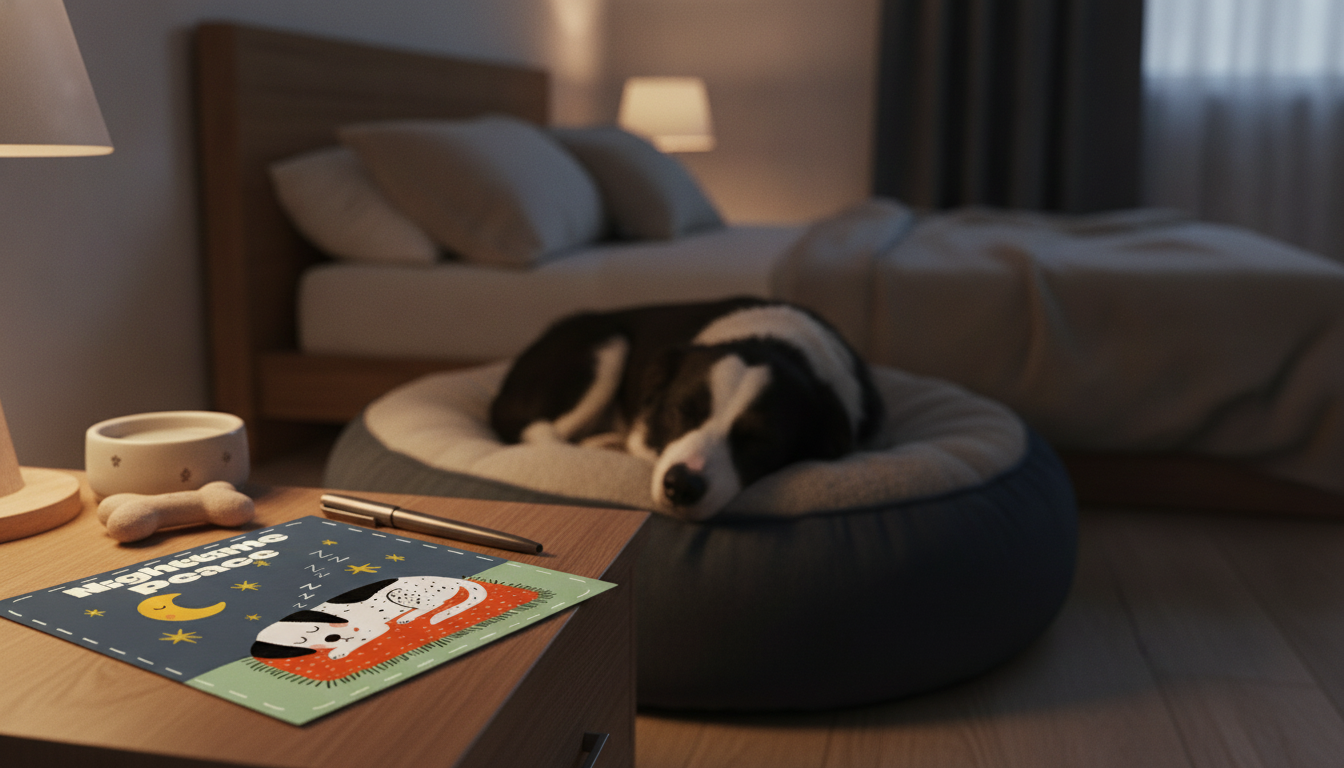
Nighttime Peace: A Practical Checklist for Quieter Nights With Your Dog
Night barking usually comes from a mix of unmet needs (bathroom, hunger, discomfort), habits (attention-seeking, inconsistent bedtimes), and triggers (noise outside, separation stress). A simple, repeatable routine makes it easier for a dog to settle and for everyone to sleep. The checklist approach below focuses on calming the environment, meeting core needs before bed, and reinforcing quiet behavior without accidentally rewarding barking.
Why dogs bark at night
Nighttime barking is rarely “random.” It’s typically one (or more) of these drivers:
- Environmental triggers: passing neighbors, wildlife, delivery noises, outside lights, or household sounds.
- Unmet physical needs: late feeding schedule, thirst, too much/too little exercise, or a needed potty break.
- Anxiety and stress: separation distress, changes in the home, or a new sleep location.
- Reinforcement history: barking has previously led to attention, being let out, treats, or play.
- Medical discomfort: pain, itching, cognitive changes in seniors, or gastrointestinal upset (consider a vet check if new or sudden).
Common nighttime barking patterns and what to try first
| What it sounds/looks like | Likely reason | First step tonight | Longer-term fix |
|---|---|---|---|
| Barking within 10–30 minutes of lights out | Needs are not fully met (potty, water, decompression) | Quiet, boring potty break on leash; return to bed | Consistent pre-bed checklist and earlier last potty |
| Barking at specific hours (e.g., 2–4 a.m.) | Outside trigger or habit cycle | White noise + block window view | Desensitization to sounds; adjust sleep location |
| Barking when owner leaves the room | Separation distress or dependency | Settle on mat with a chew; brief, calm check-ins only when quiet | Gradual alone-time training; consult a trainer if severe |
| Pacing, whining, licking, sudden restlessness | Discomfort or medical issue | Reduce stimulation; note symptoms and timing | Vet evaluation if persistent or worsening |
Nighttime Peace checklist: the 20-minute wind-down
Consistency beats intensity. This wind-down is designed to be easy to repeat, even on busy nights.
- 10 minutes: low-key movement (sniff walk in the yard, slow leash walk, or gentle indoor roaming). Avoid intense play right before bed.
- 5 minutes: last potty break on leash, minimal talking, no play. Reward returning indoors calmly.
- 2 minutes: set the sleep space (crate/bed), dim lights, close curtains, and remove visual triggers from windows/doors.
- 2 minutes: add a calming activity (food puzzle set to easy, lick mat, or a safe chew) to encourage settling.
- 1 minute: cue “bed” and reward quiet lying down; then reduce attention and end the day consistently.
If barking typically starts shortly after lights out, treat that as a clue: the routine needs more decompression (sniffing), a cleaner potty break, or fewer sights/sounds from windows and hallways.
Set up a sleep space that supports calm
A calm dog is often the result of a calm setup. Small environmental changes can prevent a lot of barking before it starts.
- Choose the right location: move the sleep area away from the front door and street-facing windows if your dog is noise-alert.
- Reduce sensory input: use blackout curtains, window film, or simply relocate the bed to an interior wall so passing headlights and shadows don’t spark “patrol mode.”
- Sound management: white noise or a fan can soften sharp outdoor sounds that trigger barking.
- Comfort basics: keep the room temperature steady and provide water as needed (especially for puppies and seniors).
- If using a crate: keep it positive—comfort item, familiar scent, and short daytime practice sessions so nighttime is not the first exposure.
For training principles rooted in humane methods, the AVSAB position statements are a helpful reference point.
Teach “quiet” without rewarding barking
For more on why dogs bark and training approaches that reduce it, see the American Kennel Club’s guide to barking.
Troubleshooting: what to do when barking starts at 2 a.m.
If the barking is tied to distress when alone, the ASPCA overview of separation anxiety can help you recognize signs that call for a more structured plan.
When to get professional help
Printable routine support (instant download)
- Use the checklist for each household member so responses to barking stay predictable and calm.
- Track notes for 7 nights to identify the most common trigger and measure improvement.
- For a ready-to-use digital format you can save to a phone/tablet (and print), consider a downloadable PDF resource like 10K in 100 Days: The Bold & Smart Path to Rapid Savings | Digital Download PDF as an example of the kind of instant-download file that’s easy to keep handy.
- If you’re organizing late-night essentials on the go (treats, leash, poop bags, training notes), a grab-and-carry bag such as the Women’s Waterproof Laptop Backpack School Travel Bag 15.6 Inch can help keep everything in one place.
- For small-item organization at home (like keeping measuring spoons or small containers in a consistent spot), wall-mounted storage options like Creative Bear Wall-Mounted Toothbrush Cups – Whimsical Bathroom Accessory can reduce rummaging and noise during nighttime resets.
FAQ
Should a dog be ignored when barking at night?
First make sure basic needs and safety are covered (especially for puppies, seniors, or newly adopted dogs). After that, avoid giving attention during barking; instead, reward brief quiet pauses and keep any checks boring and brief so barking doesn’t “work.”
How long does it take to stop nighttime barking?
If the cause is a simple routine issue, many dogs improve in a few days with a consistent wind-down and better trigger control. Habit cycles and anxiety-driven barking often take a few weeks of steady practice and careful management.
What if my dog barks at every outside noise?
Start with management: block window views, add white noise, and use a calm “thank you” then cue “bed” and reward compliance. Pair that with gradual daytime desensitization to common sounds; persistent hypervigilance can benefit from a trainer’s help.
















Leave a comment