-
Shop
- Adidas
- Advanced Technologies
- AI Skills Mastery 2026 Collection
- Best-Sellers
- Car Accessories
- Dating & Social Skills
- Digital Resources
- AI Skills
- Beauty
- Budgeting & Saving
- Car Buying & Ownership
- Cozy Feast Collection
- Electronics & Technology
- Entrepreneurship & Business Growth
- Financial Education
- Financial Independence
- Financial Mindset & Psychology
- Goal Setting
- Hobbies
- Home Styling & Organization
- Leadership
- Mindfulness
- Mindset
- Parenting & Child Development
- Personal Style & Fashion
- Pet Lifestyle & Wellness
- Positive Thinking
- Sleep Improvement
- Smart Life with AI
- Stress Management & Relaxation
- Travel Planning
- Yoga & Fitness
- Yoga & Mind-Body Practices
- Education & Learning
- Family & Parenting
- Fashion
- Furniture
- Gadgets
- Health & Beauty
- Health & Wellness
- Home & Garden
- Jewelry
- Kids & Babies
- Kitchen
- Kitchen Best-Sellers
- Nike
- Patio, Lawn & Garden
- Personal Growth
- Pet Care
- Pet Supplies
- Pets
- Sport & Outdoors
- Travel
- Wealth
- YouTube Shorts Best-Sellers
- Popular
- Best deals
Write Back to Calm: 10-Min Journaling for Clarity
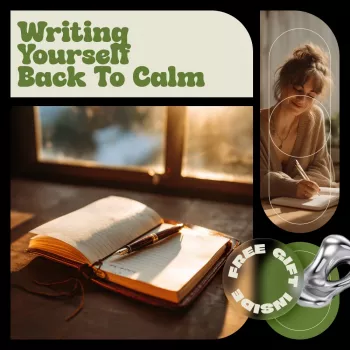
Writing Yourself Back to Calm—What It Looks Like in Real Life
“Writing back to calm” isn’t about forcing positivity or polishing your thoughts. It’s a practical way to move from mental noise to grounded awareness—one page at a time. When life feels loud, journaling can become a small, repeatable space where emotions make sense and stress becomes more workable.
Calm as a skill (not a personality trait)
Calm is something you can practice. A steady journaling routine helps shift attention from reactive thoughts (“This is a disaster”) to present-moment noticing (“My chest feels tight; I’m worried about tomorrow”). That tiny change in perspective often creates enough breathing room to choose your next move.
Emotional clarity without self-judgment
When feelings are tangled, writing helps you name what’s happening, spot triggers, and separate facts from interpretations. “They didn’t reply” (fact) can be different from “They’re mad at me” (interpretation). Clarity doesn’t erase emotion—it simply makes it easier to respond wisely.
Stress relief through mental unloading
Stress thrives on unfinished loops. Journaling gives those loops a landing place, which can reduce the pressure to keep rehearsing them mentally. Even better, the page can reveal the next small, controllable step—often the fastest route back to steadiness.
Daily reflection that builds pattern recognition
Over time, short entries can highlight patterns: sleep and overwhelm, boundaries and resentment, self-talk and motivation. The goal isn’t to “fix yourself”; it’s to understand yourself with more accuracy and kindness.
A Simple 10-Minute Journaling Structure (Beginner-Friendly)
If journaling feels intimidating, a clear structure makes it easier to start and easier to repeat. This 10-minute flow keeps the writing supportive rather than overwhelming.
| Step | Time | What to write | Example line |
|---|---|---|---|
| Check-in | 1 min | Name the current state | “Tired and tense, but wanting steadiness.” |
| Unfiltered dump | 3 min | Everything competing for attention | “Deadlines, that text message, money worry…” |
| Sort & name | 3 min | Trigger + emotion + need | “I feel anxious because I need reassurance/clarity.” |
| One next step | 2 min | Small action within control | “Email one question; take a 5-minute walk.” |
| Compassion close | 1 min | Validation + reframe | “This is hard, and I’m allowed to take it slowly.” |
For extra grounding, begin with one slow breath before you write the date. The breath is the “start button” that tells your nervous system you’re safe enough to reflect.
Mindfulness Techniques to Pair with Journaling (When Emotions Run Hot)
“Name it to tame it”
Try opening lines with “I’m noticing…” rather than “I am…”. “I’m noticing anxiety” creates a bit of distance from the feeling, which can reduce intensity and help you stay present.
Body scan in words
List three sensations (tight jaw, heavy eyes, fluttery stomach) and what each might be asking for (water, movement, rest, warmth). This keeps the writing anchored in the body rather than spiraling in the mind.
RAIN on paper
Use short sentences for: Recognize (what’s here), Allow (let it be here), Investigate (what’s driving it), Nurture (what would help). Keep it simple—this works best as a few direct lines, not a long essay.
Two-column grounding
Draw a line down the page. Left column: “thoughts.” Right column: “what’s true in the room.” This is especially helpful when worries feel urgent but vague.
Prompt Sets for Stress Relief and Emotional Clarity
Use prompts like handles—something to hold when the page feels blank. Pick one pair and answer briefly.
Building a Consistent Practice (Without Turning It Into Another Chore)
Using a Guided Journal to Stay Supported on Low-Energy Days
If a structured, calm-focused format sounds helpful, Writing Yourself Back to Calm – Journaling Mindfulness Guide for Stress Relief, Emotional Clarity & Daily Reflection offers a repeatable flow that supports emotional labeling, self-compassion, and choosing a realistic next step.
To make the habit easier to maintain, small setup items can help reduce friction. Magnetic Hooks can keep a pen or prompt card within reach on a metal surface, and a tiny “pause ritual” can be as simple as setting a warm drink beside your notebook on a small plate like the Cute Ceramic Cat Face Sauce Dish – Creative Small Condiment Plate.
When Journaling Feels Harder Than Usual
What Research and Clinicians Commonly Emphasize
Writing and mindfulness are widely used tools for stress reduction and emotional support. For a deeper look at benefits and safety considerations, see the American Psychological Association overview on writing and health, the NCCIH review of mindfulness effectiveness and safety, and the Mayo Clinic guide to meditation for stress.
FAQ
How often should journaling be done to feel calmer?
Three to five days per week is a realistic rhythm for many people, and a short daily option (even three sentences) can still be effective. Benefits usually build over weeks, so consistency matters more than length.
What if journaling makes anxiety worse?
Switch to shorter, more structured writing (bullet points, two columns, or the 10-minute template) and end with one small next action or a grounding statement. If distress increases or feels unmanageable, it’s important to seek support from a qualified professional.
Is it better to journal in the morning or at night?
Morning journaling can support intention and clarity for the day, while nighttime journaling can help process and close the day out. Choose the time that’s easiest to repeat and, if sleep is sensitive, keep evening entries calming rather than intense.
Recommended for you

Nordic 500ml Whiskey Decanter: Clear & Frosted Glass
Jun 10, 2026













Leave a comment